

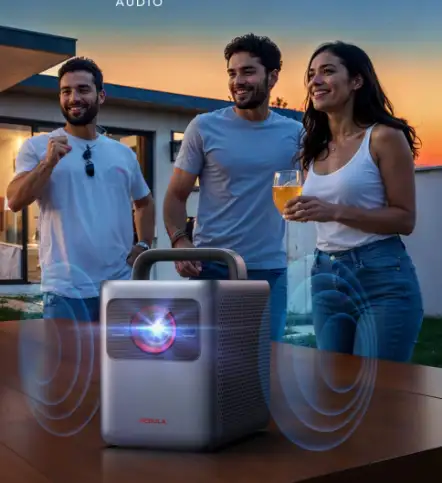
Why Are Projectors So Expensive?
The Shocking Truth Behind Price Tags & Money-Saving Secrets That Manufacturers Don’t Want You To Know
Have you ever walked into an electronics store, excited about getting a projector, only to be shocked by the price tags? You’re not alone! Projectors can cost anywhere from a few hundred to several thousand dollars, leaving many wondering what makes these devices so pricey. In this comprehensive guide, we’ll unveil the hidden factors driving projector costs and reveal insider strategies to get premium quality without breaking the bank.
Advanced Imaging Technology
Modern projectors use sophisticated DLP, LCD, or LCoS technology that requires precision engineering.
- DLP chips contain millions of microscopic mirrors
- LCD panels require liquid crystal alignment at molecular level
- LCoS combines both technologies for superior image quality
- Manufacturing tolerances measured in micrometers
High-Quality Light Sources
The lamp or LED/laser light source is one of the most expensive components.
- Traditional lamps: $200-$500 replacement cost
- LED sources: 20,000+ hour lifespan
- Laser phosphor: 30,000+ hours with consistent brightness
- RGB laser: Premium color accuracy but costs 3x more
Premium Optics & Lenses
Quality projectors feature precision glass lenses with special coatings.
- Multi-element lens designs (6-15 glass elements)
- Anti-reflective coatings to maximize light transmission
- Low-dispersion glass to prevent chromatic aberration
- Motorized lens shift and zoom mechanisms
Complex Processing Power
Today’s projectors need powerful processors to handle advanced features.
- 4K upscaling and processing requires dedicated chips
- HDR tone mapping needs significant computational power
- Frame interpolation for smooth motion
- Advanced color management systems
Limited Production Scale
Unlike TVs that are mass-produced in the millions, projectors have a much smaller market.
- Home theater projectors: ~2 million units/year globally
- TVs: Over 200 million units/year
- Specialized manufacturing facilities
- Higher per-unit costs due to lower volumes
Research & Development
Projector manufacturers invest heavily in R&D to improve performance.
- 5-10% of revenue invested in R&D
- Patented technologies (e.g., Epson’s 3LCD, TI’s DLP)
- Color science development for accurate reproduction
- Thermal management innovations
Industry Insider Secret
Many manufacturers use the same core components across different price tiers but artificially segment features through software. A $500 projector might have the same imaging chip as a $1500 model, but with locked features. This practice, known as “feature binning,” allows companies to maximize profits across market segments. Savvy buyers can sometimes unlock these features through firmware updates or third-party solutions.
Projector Technology Evolution
CRT Projectors
Bulky, expensive ($10,000+), but offered excellent color accuracy. Required professional calibration and regular maintenance. Only accessible to businesses and wealthy enthusiasts.
DLP & LCD Revolution
Texas Instruments’ DLP technology and Epson’s 3LCD made projectors more affordable ($2,000-$5,000). Still expensive for average consumers but started entering business and education markets.
LED & Laser Light Sources
Introduction of LED and laser light sources dramatically improved lifespan and reduced maintenance costs. Prices dropped to $800-$3,000 range, making home theater projectors accessible to more consumers.
4K & Smart Projectors
True 4K resolution became affordable ($1,000-$2,500). Smart projectors with built-in streaming and Android TV gained popularity. Laser technology prices dropped significantly, with entry-level models under $2,000.
Projector Type Comparison
| Projector Type | Price Range | Pros | Cons | Best For |
|---|---|---|---|---|
| DLP | $400-$3,000 | Sharp images, high contrast, compact size | Rainbow effect, limited color accuracy | Home theater, gaming |
| 3LCD | $500-$5,000 | Excellent color, no rainbow effect, bright | Larger size, lower contrast | Presentations, bright rooms |
| LCoS | $1,500-$10,000 | Superior color, film-like quality, high resolution | Expensive, lower brightness | Dedicated home theaters |
| Laser | $1,200-$20,000 | Long lifespan, consistent brightness, low maintenance | Higher initial cost | Commercial, high-end home |
| LED | $300-$2,000 | Long lifespan, portability, low power consumption | Lower brightness, limited color gamut | Portable, casual use |
Money-Saving Tip
Consider refurbished projectors from reputable sellers. Manufacturers often sell certified refurbished units with full warranties at 20-40% discounts. These are typically returns with minor issues that have been professionally repaired and tested. You get near-new performance at significantly lower prices.
Frequently Asked Questions
For serious home theater enthusiasts and business professionals, yes. Premium projectors offer significantly better color accuracy, contrast, brightness, and resolution. They also have better build quality and longer lifespans. However, casual users might not notice enough difference to justify the price premium.
For a quality home theater experience, budget $1,000-$2,000. This range gets you 1080p or 4K resolution with good color accuracy and brightness. For business presentations, $500-$1,000 is sufficient. Portable projectors can be found for $300-$600. Remember to factor in screen and mounting costs.
Yes, but slower than other electronics. Projector technology evolves gradually, so prices drop about 15-20% per year for older models. New technology typically stays at premium prices for 2-3 years. The best deals are often on last year’s models when new ones are released.
The light source and optical engine typically account for 40-60% of the total cost. High-quality lamps, LED arrays, or laser modules are expensive to manufacture. The imaging chip (DLP, LCD, or LCoS) is the second most costly component, followed by the lens assembly and processing electronics.
Ready to Find the Perfect Projector Without Breaking the Bank?
We’ve researched and tested dozens of projectors to find the best value options that deliver exceptional performance without the premium price tag. Our curated selection includes top-rated models at every price point with exclusive discounts you won’t find elsewhere.
Discover Top-Rated Projectors On Sale NowSmart Buying Strategies for Projectors
While projectors can be expensive, understanding what you’re paying for helps you make a smarter purchase. Focus on the features that matter most for your specific needs rather than getting caught up in specifications you won’t use. Here are our top money-saving strategies:
- Buy last year’s model: Save 20-30% with minimal performance difference
- Consider refurbished units: Get like-new quality with full warranty
- Look for holiday sales: Black Friday and Prime Day offer significant discounts
- Bundle with accessories: Negotiate package deals with screens and mounts
- Check manufacturer outlets: Official refurb stores often have hidden gems
- Join loyalty programs: Brands like Epson and BenQ offer member discounts
Remember that a quality projector is an investment that can provide years of entertainment or productivity. By understanding the factors that contribute to their cost, you can better evaluate which features are worth the premium and where you can save money without sacrificing performance.